Past papers
MDCAT past papers
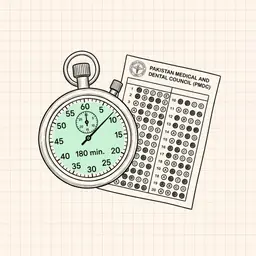
These are the papers previous candidates sat, kept in their original question order. The archive covers 6 boards and runs from 2000 to 2026. Each row shows how many questions that paper holds today. The 2026 papers are free, with the answer key and a worked explanation for every question.
Start with your board
Each board page holds that board's papers, what makes its paper different, and three real questions with the answer and explanation.
Every paper in the archive
Board first, then the newest year. The questions column is the number each paper holds today.
| Paper | Board | Year | Questions | Time |
|---|---|---|---|---|
| Punjab (UHS): 18 papers | ||||
| Punjab (UHS) MDCAT 2026 (recalled) | Punjab (UHS) | 2026 | 237 | 180 min |
| Punjab (UHS) MDCAT 2025 | Punjab (UHS) | 2025 | 180 | 180 min |
| Punjab (UHS) MDCAT 2024 | Punjab (UHS) | 2024 | ||
Three passes, and the second one is where the learning happens
The first pass is a test. The work starts when you mark it.
First pass
Sit it under the clock
Open the paper in timed mode and keep to the clock on its row. Do not pause for notes. This pass is for finding the questions you cannot finish, not the ones you can.
Second pass
Mark it and read every explanation
Read the explanation for the questions you got right as well as the ones you missed. A right answer for the wrong reason is still a gap, and it is the one a student never revisits. See how to review wrong answers.
Third pass
Take the chapter back to practice
Write down the chapter, not the question. Read the chapter note, then do a short chapter drill. The paper told you where to go, and chapter practice is how you get there.
The topics that repeat are measured from these papers, not guessed. Read what repeats across the past papers before you decide a chapter is low-yield.
Try a real past paper right here
Ten positions from the 2026 Punjab paper, answered without an account. Your score, the answer key and the worked explanation for every question, free.
Try a real past paper. Ten questions, free.
Ten positions from the 2026 Punjab MDCAT paper, marked with the real answer key, with the worked explanation for every answer. No account needed. The same questions every time, so you can compare attempts.
Five questions from the 2026 papers
A question from five of the boards, with the answer key and the explanation a student sees after answering.
- Question 1, English, Formal and Lexical Aspect of Language, UHS 2026 (recalled)The cat chased the rat . The underlined word is _______.
- Adverb of time
What you can do without paying
The 2026 papers are open. The pass adds the older archive and the tools around it.
The 2026 papers are free, in timed or tutor mode, with the answer key and a worked explanation for every question. A free paper does not use your 500 practice attempts. The free attempts cover the practice bank, with worked explanations included.
The MDCAT Pass adds the papers before 2026, full timed mocks, analytics and a higher SAGE allowance. The pricing page lists the difference in one table.
A paper is a position in a real exam, not a set of random questions. The runner keeps the original order and the original clock, which is the part a chapter drill cannot simulate.
Questions about the archive
The short answers, including the two places where the archive is not what it looks like.
Are the MDCAT past papers free?
The 2026 papers are free, in timed or tutor mode, with answers and worked explanations. Papers before 2026 are included in the MDCAT Pass. A free paper does not use your 500 practice attempts.
How many MDCAT past papers are there?
This archive holds 114 papers from 6 boards, from 2000 to 2026. Each row shows how many questions that paper holds today.
Which past paper should I start with?
Start with the board whose paper you will sit. If you are not sure yet, sit the Federal paper first, then the paper for your province. The result is a diagnostic, not a forecast: it tells you which chapters to revisit.
Practise a paper in the app
Open a paper in timed or tutor mode. The archive keeps each paper in its original order and its original clock.