Alcohols and Phenols MCQs for MDCAT Practice
Chemistry section, Alcohols and Phenols chapter. Up to eight free sample questions, each with the correct answer and a worked explanation. The full chapter opens in the app.
The bank has 848 active questions on this chapter. Your first 500 practice attempts are free, and every attempt includes a worked explanation.
- Question 1The oxidative cleavage of the given diol produces
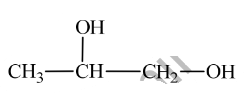
- 2 molecules of ketone.
- 1 molecule of ketone and 1 molecule of ester.
- 1 molecule of aldehyde and 1 molecule of ester.
- 2 molecules of aldehyde. (correct answer)
Correct answer: DOxidative cleavage of vicinal diols with periodate yields aldehydes or ketones based on the substitution of the carbons bearing the hydroxyl groups. - Question 2Why are lower alcohols more soluble in water than higher alcohols?
- ecause lower alcohols form stronger hydrogen bonds with water due to their smaller size. (correct answer)
- ecause lower alcohols have higher molecular weight, making them more polar.
- ecause higher alcohols have stronger hydrogen bonding with water.
- ecause higher alcohols have longer nonpolar hydrocarbon chains that resist dissolution.
Correct answer: ALower alcohols are more water-soluble due to increased hydrogen bonding capacity relative to their hydrophobic alkyl chains, a trend that reverses with increasing chain length. - Question 3Which is most acidic?
- H2O (correct answer)
- C2H5OH
- C4H9OH
- CH3-CH2-CH2OH
Correct answer: AAcidity of alcohols and water is determined by the stability of their conjugate bases; electron-donating groups decrease acidity. - Question 4Which of the following statements about the acid-base reaction of phenol is true?
- Phenol acts as a proton acceptor
- Phenol acts as a proton donor (correct answer)
- Phenol does not undergo acid-base reactions
- Phenol reacts with both acids and bases
Correct answer: BPhenol's acidic nature stems from resonance stabilization of its phenoxide ion, making it a weak acid. - Question 5Phenol is a ____ liquid.
- Dense
- Hard
- Deliquescent (correct answer)
- Intermittent
Correct answer: CPhenol's hygroscopic nature means it absorbs atmospheric moisture, making it 'deliquescent'. This property is key to understanding its physical behavior. - Question 6Which of following compound is solid at room temperature?
- Ethanol
- Phenol (correct answer)
- Butane
- Methanol
Correct answer: BPhenol's extensive hydrogen bonding, due to its -OH group attached to an aromatic ring, results in a higher melting point, making it solid at room temperature. - Question 7Primary alcohols upon oxidation with acified dichromate gives:
- Aldehydes (correct answer)
- Ketones
- Alkenes
- Alkynes
Correct answer: APrimary alcohols are oxidized to aldehydes by acidified dichromate. Further oxidation to carboxylic acids requires stronger conditions or excess oxidizing agent. - Question 8The temperature required for the dehydration of ethanol into ethene in the presence of H2SO4 is:
- 130°C
- 175°C
- 170°C
- 180°C (correct answer)
Correct answer: DDehydration of ethanol to ethene requires concentrated H2SO4 at 180°C, distinguishing it from ether formation at 130°C.
Practise all 848 Alcohols and Phenols questions
A free account keeps your correct, incorrect and unseen questions separate, and shows the explanation after every attempt.
Create a free accountRead the full Alcohols and Phenols chapter notes: Alcohols and Phenols notes. Or browse every chapter.